
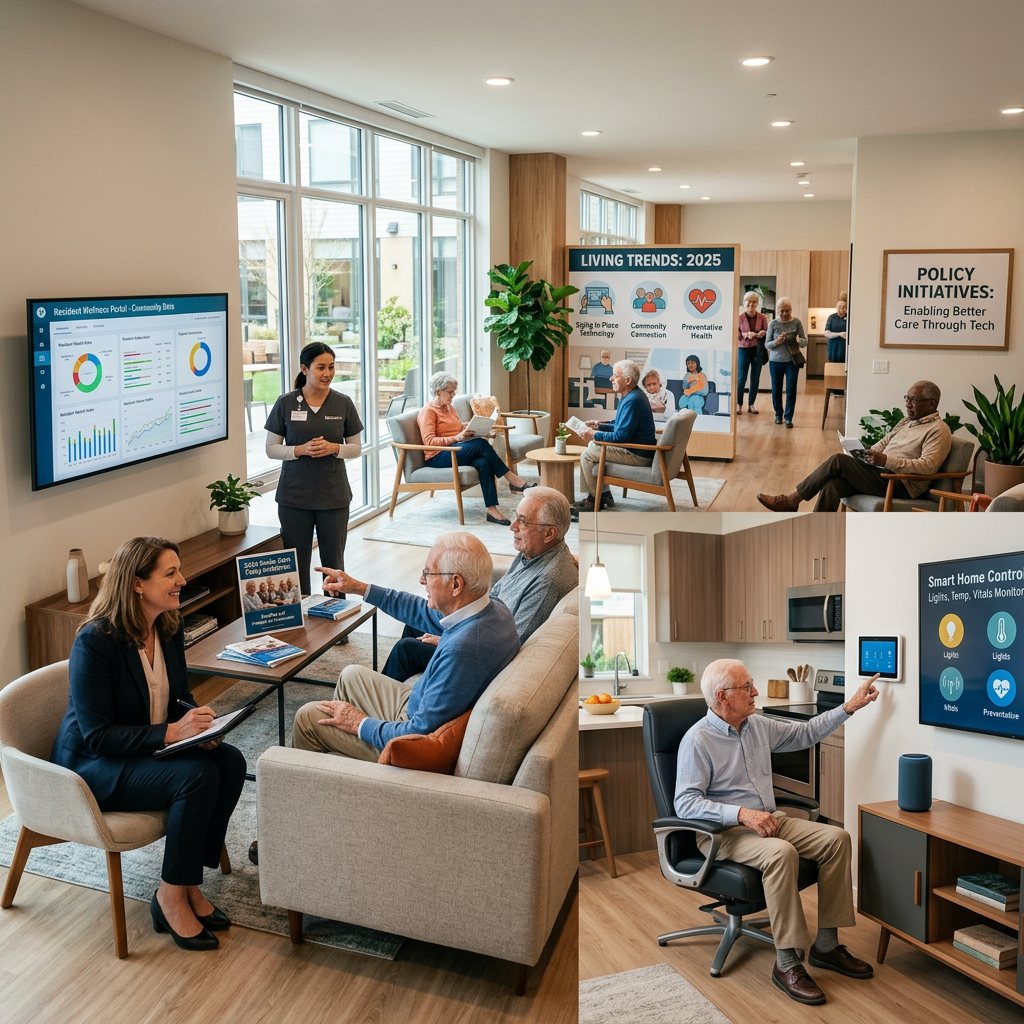
With a quarter-century in healthcare – spanning direct clinical care and administrative roles, I have seen firsthand how rapidly the landscape of elder care evolves. Throughout my experience, Senior Care has become an increasingly important and dynamic field. From running my own home care agency to studying gerontology, my work across both the front lines and behind the scenes has made one thing clear: aging is not just about managing health conditions. It’s about preserving independence, protecting dignity, and building sustainable environments where older adults can truly thrive. Autonomy is important to preserve as long as possible. This helps with living a better quality of life.
Whether tracking public policy shifts or integrating smart technology into home environments, staying ahead of industry trends in Elder Care is essential for providers, caregivers, and families alike. Let us take a look about pertinent information current as of 2026.
Policy & Financial Shifts
- Social Security COLA: A 2.8% Cost-of-Living Adjustment (COLA) took effect to help monthly benefits keep pace with inflation. Additionally, new federal tax legislation provides an extra deduction of up to $6,000 for eligible tax-paying seniors.
- Medicare Part B & Drug Savings: Medicare Part B standard monthly premiums rose to $202.90. Offsetting these costs, Medicare’s newly negotiated drug prices went into effect, cutting out-of-pocket spending by 50% or more on key medications treating heart disease, diabetes, and kidney conditions.
- Long-Term Care Financing: A Journal of the American Geriatrics Society study highlighted growing public debate on long-term care funding, with over 51% of active family caregivers advocating for government programs to cover elder care costs rather than private out-of-pocket savings.
Technology & Smart Aging In Place
- AI & Predictive Health: Emerging artificial intelligence models – particularly speech-analysis tools – are demonstrating up to 78.2% accuracy in forecasting cognitive decline and Alzheimer’s disease progression years before clinical symptoms manifest, offering new possibilities for Senior Care.
- Smart Home Infrastructure: The standard for “aging in place” relies increasingly on ambient intelligence. Voice-activated controls, motion-activated lighting, and non-intrusive fall detection sensors (achieving 80% accuracy without false alarms in clinical trials) allow older adults to remain safely in their homes longer.
- Automated Assistance: To help mitigate widespread home health aide shortages, health networks are piloting robotic patient-lifts, mobility exoskeletons, and therapeutic companions like PARO. Clearly, Senior Care is evolving rapidly with technology.
Health Research & Senior Living Trends
- National Workforce & Health Metrics: According to America’s Health Rankings, the geriatric clinical workforce reached an all-time high, and non-physical activity rates among the elder cohorts dropped by 16%. However, challenges remain, with food insecurity affecting 7.4 million older adults alongside rising mental health needs.
- Functional Fitness & Geroscience: Senior wellness programming is shifting toward functional strength training specifically tailored to fall prevention and daily task endurance. Simultaneously, clinical research into cellular aging targets (such as NAD+ and senolytics) continues to gain traction in delaying age-related chronic conditions.
- Micro-Campuses & Active Living: Senior housing models are steering away from institutional settings toward urban, walkable “micro-campuses” and active adult communities that prioritize social connection, autonomy, and neighborhood integration.
- Community Revitalization & Legacy: Broader urban renewal initiatives – like the reopening of Detroit’s KRONK Gym at the historic Brewster-Wheeler Recreation Center – highlight how community spaces, active fitness programs, and intergenerational mentorship preserve local history while giving aging adults, and youth alike accessible places to stay active and engaged.

Welcome to Eccentric Aging. My name is Heather, and I created this platform to offer free direct, reliable support to caregivers and aging adults navigating complex long-term care needs. With over 25 years of professional experience in healthcare, I hold a Bachelor of Science in Gerontology and am a Certified Dementia Practitioner (CDP). Following the pandemic, I owned and operated a home care agency, gaining first-hand insight into the operational, financial, and emotional challenges of senior care delivery. Beyond my professional background, I have personally walked in your shoes as a caregiver. It can be overwhelming to care for a loved one, while managing your own aging journey.
Leave a Reply