
Senior Facility Tours: What Home Care Owners & Families Must Look For
It is crucial for home care owners, caregivers, and families to tour assisted living communities, rehabilitation centers, and memory care facilities, well before a loved one actually needs placement. Taking tours proactively – rather than during a medical crisis or sudden decline – gives you the time to evaluate facilities objectively without the emotional pressure of an urgent deadline.
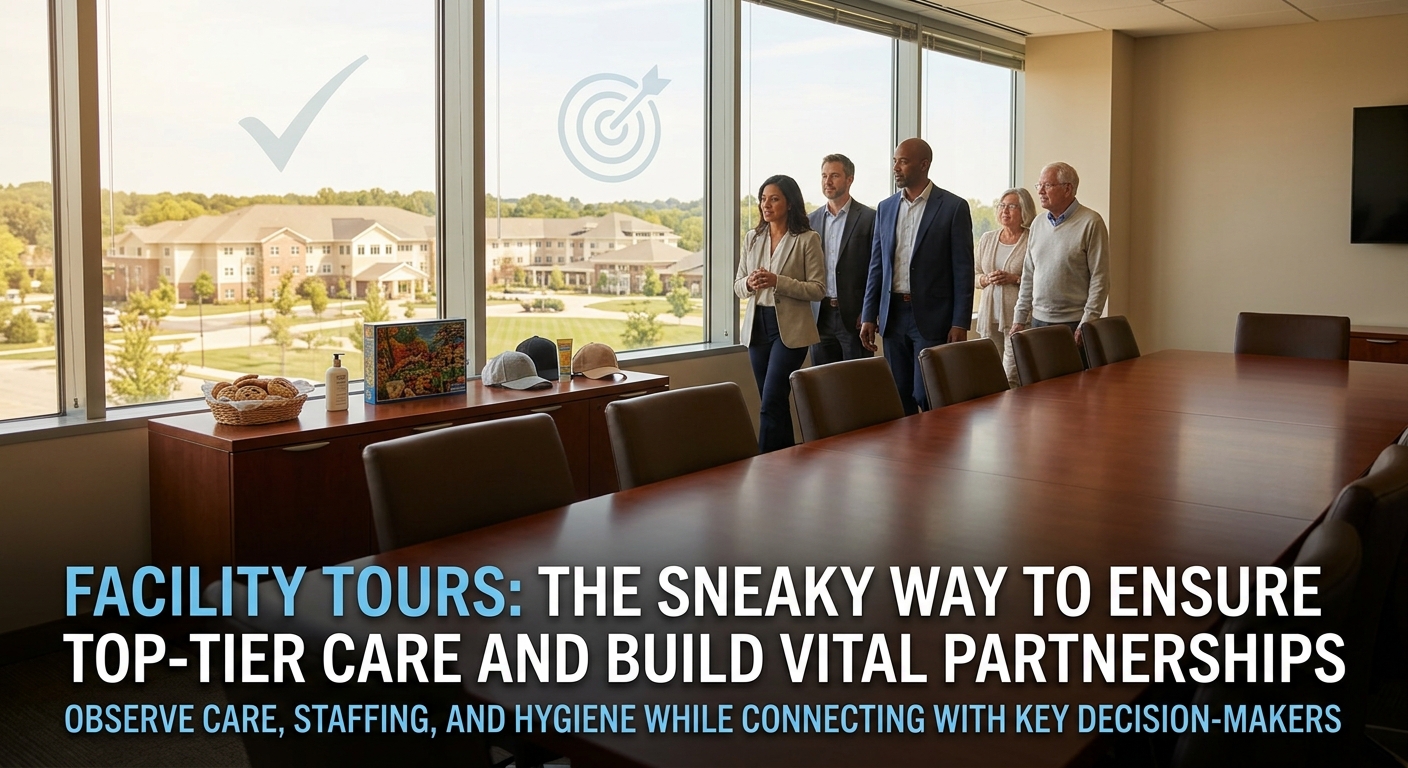
When owning a home care agency, taking tours served a strategic dual purpose. It allowed me to accomplish two key objectives at once; I could observe the true level of care, overall cleanliness, and staffing dynamics firsthand. Knowing these internal details ensured I was sending clients to facilities that matched my standards. At the same time, booking these formal tours meant connecting directly with key decision-makers rather than stopping at the front desk gatekeeper.
Always show thanks and respect. Activity budgets in memory care are typically small; yet directors are expected to run nearly ten activities a day. To show appreciation for their time, I gave activity directors practical items for the facility; I provided large-piece games, as well as hats and sunblock for residents during outdoor time. I also brought treats for staff and residents, and gave flowers to the person guiding the tour.
One Memory Care community that I toured was awful. They were supposed to have ten activities a day for the residents. However, for the two hours I was there I was concerned. The nursing assistants were painting in there scrubs. No activities were going on and I only saw one resident. She was strolling the halls. She approached me and pretended to bite me. The other people were in their rooms. The place was clean and looked nice, but I would not place anyone there! There were definitely red flags that I had observed!
Why Facility Knowledge Is Essential for Home Care Owners
- Client Safety and Transition Planning: Home care clients often reach a point where in-home care is no longer sufficient; knowing top-tier facilities allows you to guide families through a smooth, informed transition.
- Building Mutual Referral Networks: Facility directors frequently need reliable home care partners for residents discharging home or requiring one-on-one attention; establishing direct relationships creates a consistent pipeline of referrals.
- Understanding Local Standards: Seeing different operating models gives you a clear baseline for quality; it helps you evaluate what top care looks like across the continuum.
Key Observation Points for Owners & Caregivers During a Tour
- Resident Engagement and Staff Demeanor: Look at how staff interact with residents in common areas; staff should be patient, warm, and actively engaging residents rather than rushing past them.
- Facility Cleanliness and Maintenance: Pay close attention to subtle odors, carpet condition, bathroom hygiene, and how promptly call lights or assistance requests are answered.
- Activity Quality: Check if the published activity schedule is actually being executed; notice whether activities are meaningful and well-attended or just listed on paper.
- Staff-to-Resident Ratios: Observe if the facility appears short-staffed during meal times or transitional hours when care demands peak.
Red Flags: Reasons to Avoid a Facility or Company
- Pervasive Unpleasant Odors: Persistent smells of urine or heavy chemical cover-ups signal underlying issues with housekeeping and hygiene protocols.
- Unanswered Call Lights & Ignored Residents: Hearing unanswered call alarms or seeing residents sitting unattended in hallways for extended periods is a major warning sign.
- High Staff Turnover & Unfriendly Demeanor: Burned-out, abrupt, or uncommunicative staff points to poor management and unstable working conditions.
- High-Pressure Sales Tactics: Avoid facilities that push for immediate contract signatures or financial deposits before addressing care plans or touring thoroughly.
- Lack of Transparency: Refusal to show specific care units, reluctance to answer questions about staffing ratios, or hiding state survey and inspection reports.
Additional Token-of-Appreciation Ideas for Facilities
- Adaptive Recreation Items: Soft grip stress balls, large-print playing cards, or tactile sensory fidget boards.
- Arts & Crafts Supplies: Bulk packs of washable paints, heavy cardstock, adult coloring books, or easy-grip paintbrushes.
- Outdoor & Seasonal Gear: Lightweight outdoor blankets, clip-on shade umbrellas for wheelchairs, or polarized sunglasses.
- Staff Breakroom Essentials: Premium coffee pods, gourmet teas, hand lotions, or fresh fruit baskets for the nursing staff.

Leave a Reply